Food Chemistry, June 2025 | Fenfen Lei et al., Wuhan Polytechnic University
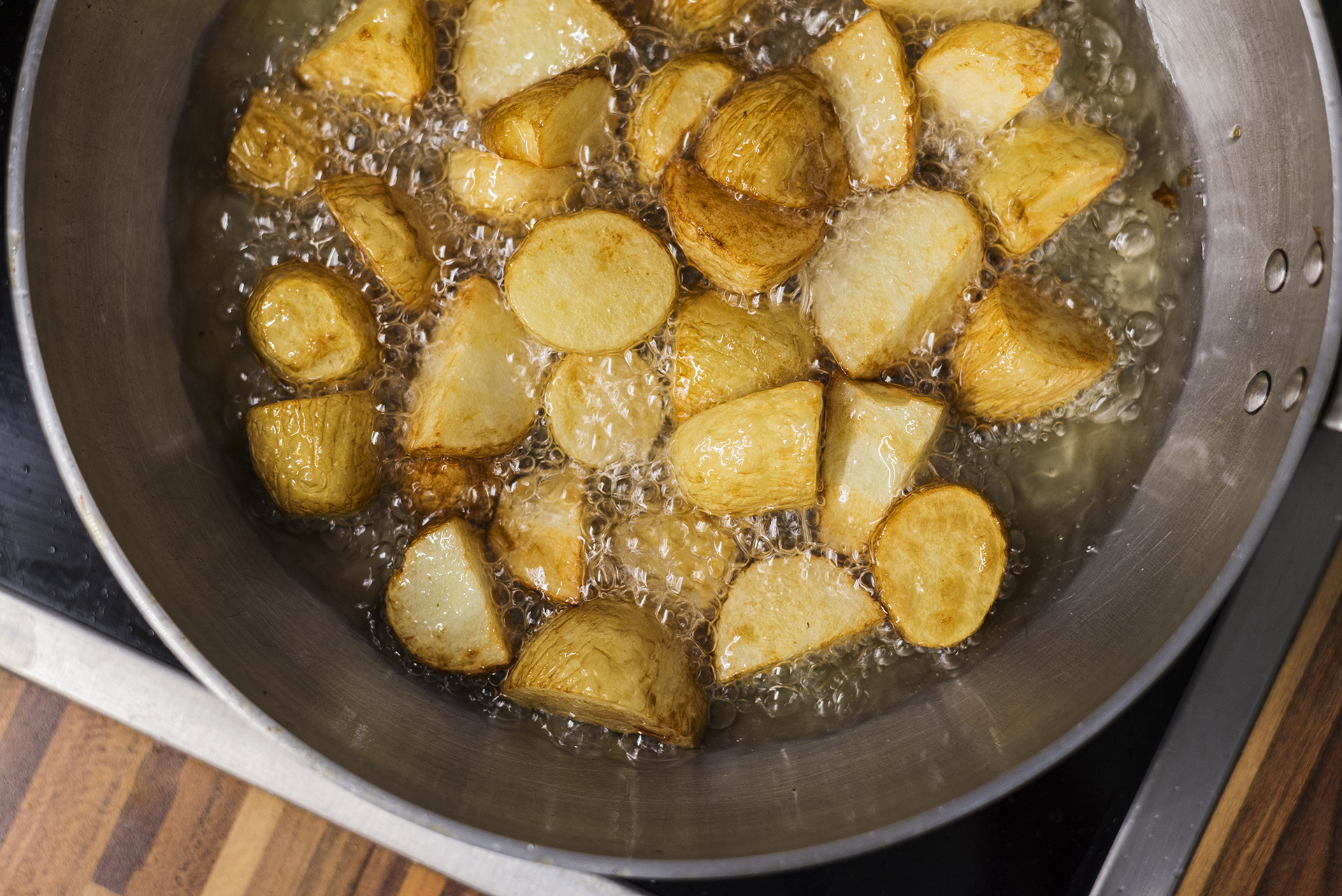
A study published in Food Chemistry last summer found that beef tallow held up better than two common seed oils under repeated deep frying, breaking down far more slowly and producing lower levels of benzo[a]pyrene, a dangerous compound linked to high-heat cooking.
Researchers at Wuhan Polytechnic University, led by Fenfen Lei, compared beef tallow with canola oil (rapeseed oil) and rice bran oil across sustained frying cycles.
Chemistry explains the gap. Seed oils are high in polyunsaturated fats, with molecular structures that make them vulnerable to breakdown under heat. Oxidized fats generate free radicals, the unstable molecules that can drive cellular damage and chronic inflammation linked to cardiovascular disease, cancer, and cognitive decline. The saturated fats in tallow are structurally more stable, and tallow’s smoke point sits around 400°F, above the range at which most foods are typically fried.
Compromised frying oil passes its harmful components along to the food. While fried foods should be consumed with great moderation, there is clearly a safer choice when it comes to oils.
Tip: When searching for a quality beef tallow product, look for a few specific markers. The most important is freshness. Most commercial tallow comes from fat stored for weeks or months before rendering, a window during which any fat begins to break down. Tallow rendered the same day the cattle are processed avoids that delay. Also worth checking: low-temperature rendering without chemical bleaching or deodorizing; cattle raised on US pastures without growth hormones or antibiotics; and a single-ingredient label.