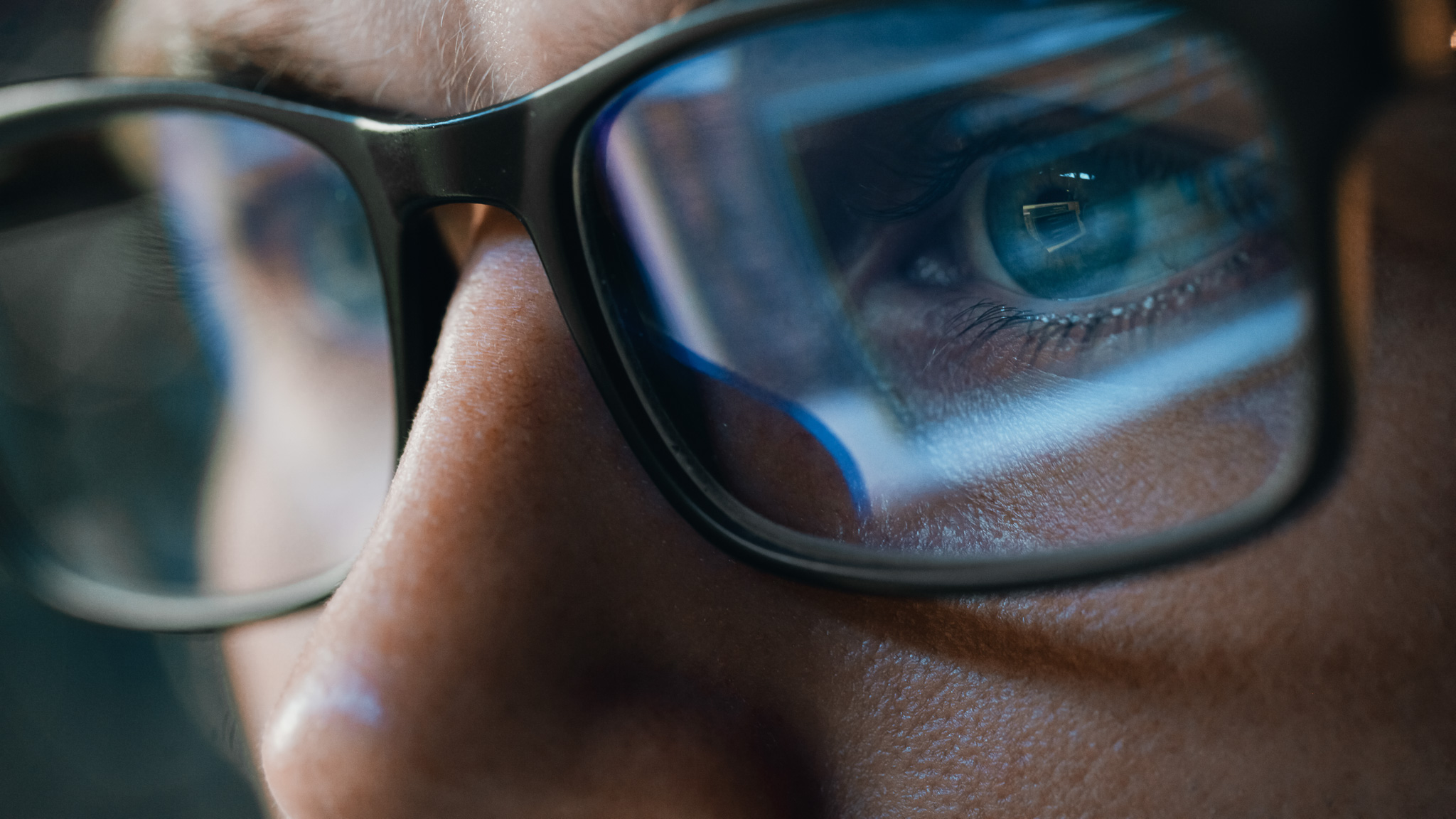
Computer screens and mobile phones are often blamed for sleep disruptions and headaches, with blue light cast as the villain. Blue light filters promise to protect your eyes, improve sleep, and stop headaches—but science tells a more nuanced story.
Blue light—visible light in the 400–490 nanometer range—can influence the body’s circadian rhythm. Blue light is naturally emitted from the sun and helps keep us alert during the day. As daylight fades, melatonin rises, signaling a transition to sleep. As screens have become ubiquitous in modern life, theories have begun to suggest that artificial blue light tricks the brain into staying awake, disturbing restful sleep.
But new research shows that the story is more complicated than what was originally believed.
Sleep Sabotage by Design
Light does influence sleep, but the bigger culprit, research is finding, is stimulation. Scrolling TikTok, playing video games, or binge-watching reels revs up your brain, delaying the melatonin you need to drift off.
Any activity that excites the brain right before bed—whether it’s social media, emails, or a gripping TV show—can disrupt sleep. And with social media, the problem isn’t just time online but how emotionally hooked we get. Just as we’re settling into bed, the algorithm-driven feed hits us with breaking news, interesting facts, catchy songs, bright visuals, and endless pings. Instead of winding down, our brains amp up, keeping us scrolling.
And that’s no accident. As Adam Alter, author of Irresistible: The Rise of Addictive Technology and the Business of Keeping Us Hooked, explains, “The people who create video games, apps, and digital content are designing them to be as addictive as possible.”
Platforms use autoplay, bottomless feeds, and unpredictable rewards to trigger dopamine and keep us chasing the next hit—making it harder to put the phone down, even when we know we should. Is blue light part of the equation? Yes. But its sleep-disrupting effects pale in comparison to what the content we’re consuming is doing to our brain chemistry.
The Root of Tech Headaches
Blue light often takes the blame for headaches too, but eye specialists point elsewhere. The American Academy of Ophthalmology flatly states that blue light–filtering glasses do nothing to prevent eye strain.
The real culprits are the hours spent looking at screens, holding phones inches away from your face, or hunching over laptops. Strain your eyes and your posture for long enough, and headaches will follow—no blue light required.
But Blue Light Does Matter for Your Eyes
If blue light glasses won’t fix your sleep or headaches, why worry about blue light at all?
Because cumulative exposure matters for long-term eye health.
Americans now spend over seven hours daily staring at screens. While blue light won’t cause immediate damage, years of exposure raise legitimate concerns about oxidative stress to the retina, macula, and lens.
This is where nutrition makes a difference that glasses can’t.
Lutein and zeaxanthin—carotenoid antioxidants found in dark leafy greens— work like internal sunglasses, filtering blue light at the cellular level. Most people get only 2 mg daily through diet, far below the 10 mg of lutein and 2 mg of zeaxanthin recommended for healthy eyes. Melaleuca’s NutraView® Vision Support helps bridge the gap most people have in their diet for reliable eye protection at the cellular level.
Smarter Habits, Better Rest
The real solutions aren’t as simple as slipping on a pair of glasses, but they work much better.
- Take tech breaks: Use the 20-20-20 rule. Every 20 minutes, look 20 feet away for 20 seconds. This rule matters all day long.
- Back up: Keep screens 16–24 inches from your eyes.
- Set boundaries: Think of screen use like caffeine— it’s stimulating and best avoided before bed.
- Supplement: The right nutrition can support a lifetime of healthy vision.
Too much screen time can affect your health. Research is clear that the solution doesn’t start with glasses—it starts with better habits and targeted nutritional support. Blue light may not be stealing your sleep, but your eyes still need protection. And being aware might help guide you to habits that are better for your health.