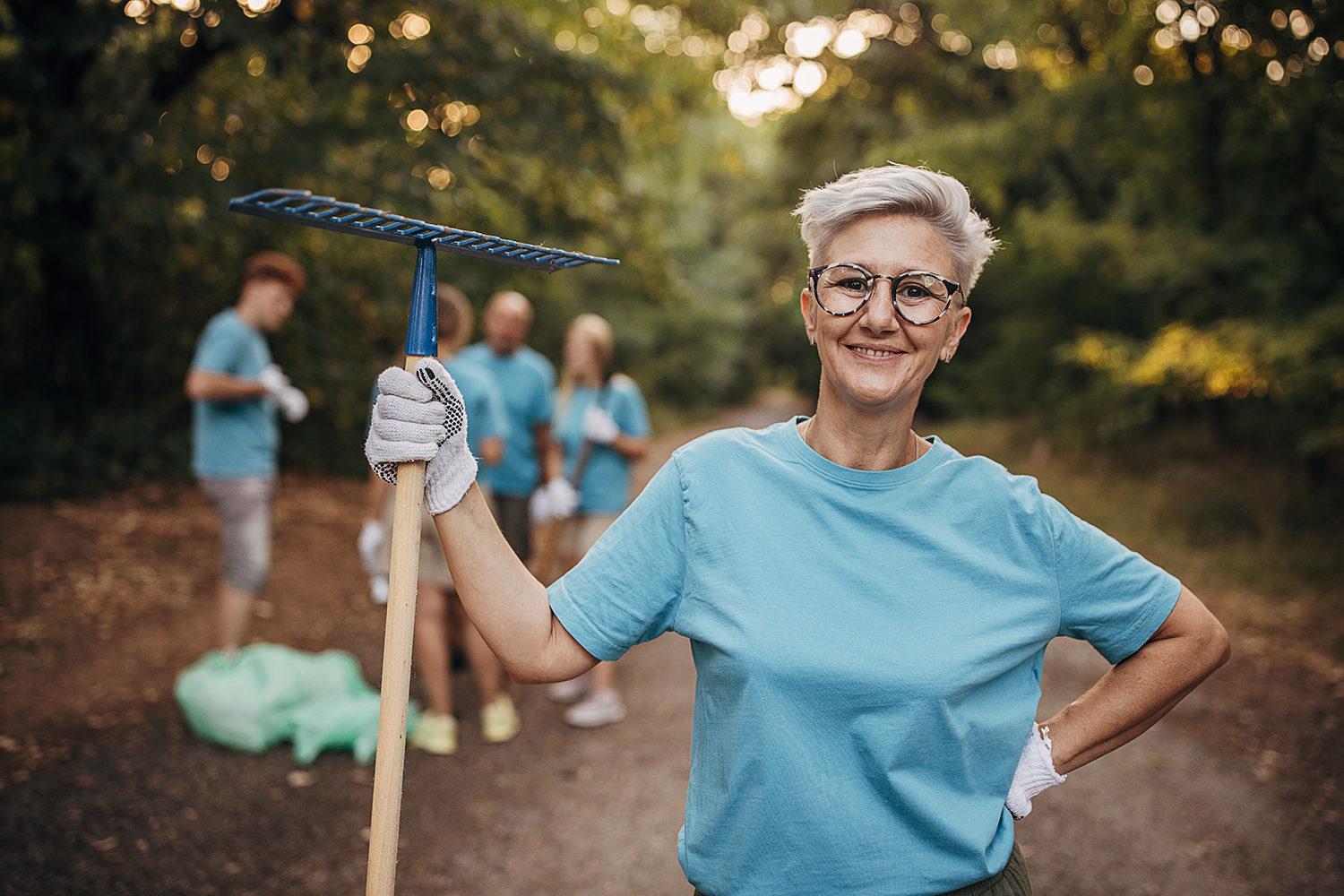
Donating your time isn’t just good for your community. New research suggests it may improve health markers—like blood pressure and mood—as much as certain prescription treatments.
Most people volunteer because it feels like the right thing to
do. But did you know that helping others triggers measurable physical changes throughout your body, including in your brain? The benefits of volunteering have been found to mirror the effects of antidepressants. Scientists have named it “the helper’s high.”
When you donate time to a cause, you activate the same brain regions responsible for pleasure and reward. Dopamine floods your system. And unlike fleeting happiness from shopping or scrolling, this boost motivates more helping behavior, creating a self-reinforcing cycle of well-being.
Health Benefits You Can Measure
Recent research on volunteering reads like a scientific breakthrough. Carnegie Mellon University found that older adults who regularly volunteer about four hours per week have a 40% lower risk of developing high blood pressure over the next four years than nonvolunteers. To put that into perspective, that’s comparable to the protective effect of prescription blood pressure medications—without the side effects.
And the benefits don’t stop there. According to the National Institutes of Health, volunteers report better mood, lower stress, and greater sense of purpose.
The US Surgeon General calls loneliness an epidemic—half of American adults experience it, raising their risk of heart disease, stroke, dementia, and depression. Volunteering provides a direct countermeasure by creating meaningful relationships built around shared purpose.
Time You Get Back
Researchers note that donating time changes your perception of it. You feel like you have more.
A 2012 study found that people who spent time helping others felt more time-rich than others who don’t. The reason? Helping others builds what researchers call “self-efficacy”—proof that you can make things happen.
Volunteers consistently feel less rushed—not because they have fewer responsibilities but because helping others creates a sense of capability and accomplishment.
A Healthier Community
Volunteering has also been shown to be viral. When you help at a food bank or walk dogs at a shelter, you’re not just serving—you’re modeling service. Research has proven that simply seeing someone help another person makes us more likely to do something altruistic ourselves.
This matters because 94% of volunteers say helping others improves their mood, according to UnitedHealth Group. Your better mood leads to better relationships. Those relationships lead to reduced community isolation. Less isolation leads to lower disease risk across entire neighborhoods.
Where to Start
When you desire to serve others, the entry barrier is remarkably low. You don’t need special skills or major time commitments. Start by searching online for local volunteer projects—many people discover opportunities they never knew existed.
The science of gratitude offers a final compelling reason: Helping others shifts your perspective. When you serve, you gain appreciation for what you have while simultaneously creating a “social glue”—it inspires generosity, strengthens relationships, and helps people find, remind, and bind social connections.
A Prescription You Write Yourself
Lower blood pressure. Reduced stress. Better mood. Decreased inflammation. Higher self-esteem. More time. Deeper relationships. Volunteering delivers on all fronts.
When you help, you heal. When you give, you gain. The research proves this long-understood wisdom: The fastest way to enhance your own life is to stop focusing on it and focus on someone else’s instead.