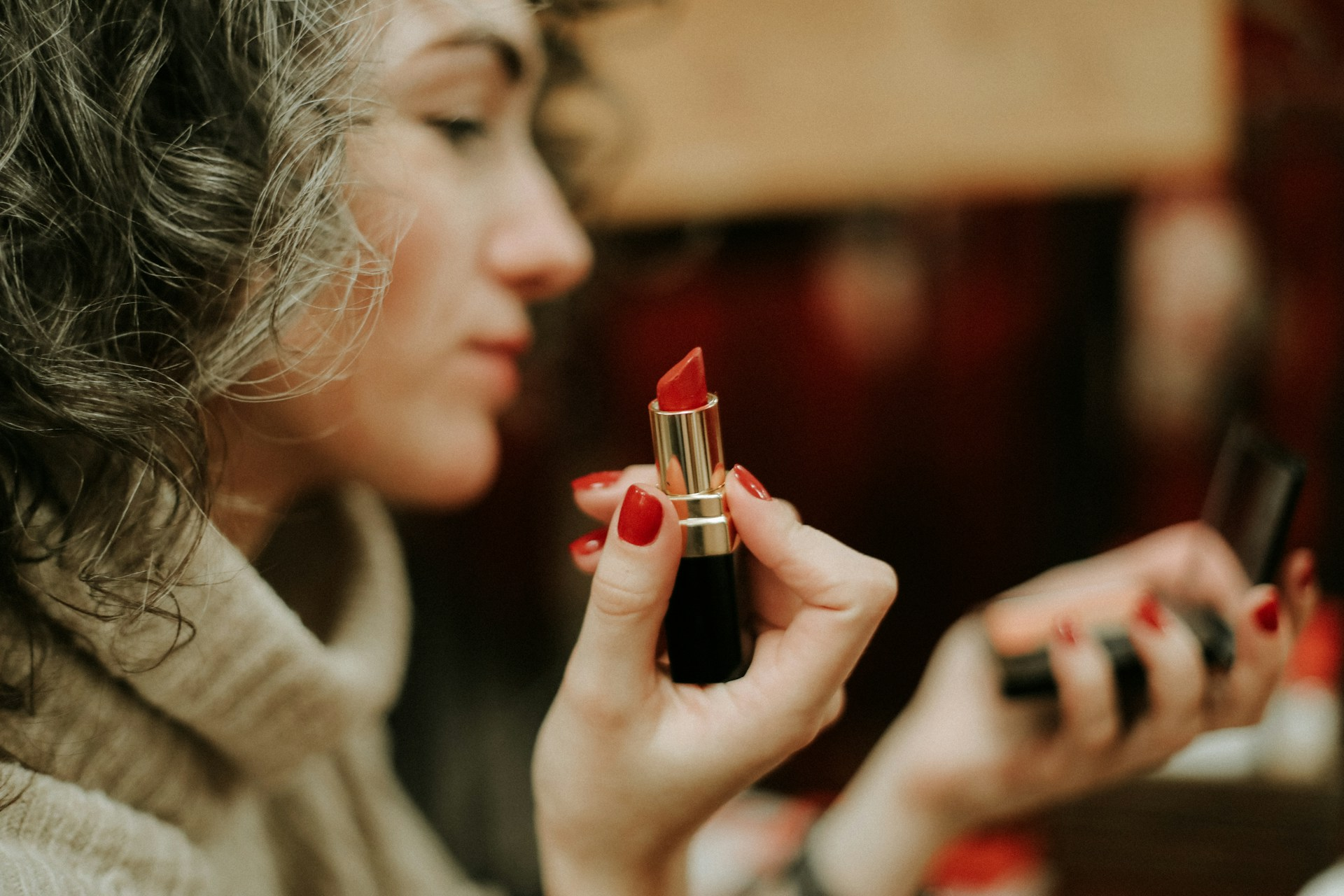
When the world wobbles, women reach for lipstick.
At least, that’s what economists once said. During the recessions of 2001 and 2008, lipstick sales rose even as consumer spending shrank. Buying lipstick was a defiant grasp for control—a small luxury that restored a sense of normalcy. This economic anomaly became known as the lipstick index, shorthand for how women navigate instability with something tangible, affordable, and optimistic.
Today, the story has changed. Beauty is no longer about acts of control or keeping up appearances. In a world of hypercomparison and photo filters, it has become about deeper health. Newsweek notes that the lipstick index doesn’t cleanly track with economic downturns—sales of cosmetics fell during the 2020 pandemic, even as self-care and skin care rose. The shift reflects a broader change: beauty choices follow emotional rhythms more than financial ones.
Backed by Science
In a 2020 study, researchers found that following a simple skin care routine measurably improved empowerment, happiness,
and self-esteem—and the effects lasted a full two weeks, even after participants stopped. The daily ritual of cleansing and caring became a quiet declaration: I can do something good for myself, right now.
More recent work extends that finding. A 2025 United Kingdom study explored how women navigate stress through affordable luxuries and found that their choices were about stability over glamour. Participants described small indulgences—trusted skin care products, a quality lipstick, a favorite cup of coffee—as anchors that offered emotional balance and a sense of agency. What once symbolized status now represents self-care, endurance, and well-being.
The Science of Skin and Mind
Researchers are now mapping what many have long known intuitively: Caring for your skin can calm your mind. But it also does something even more fundamental—it supports your health. Your skin is your body’s largest organ, a living system that protects, regulates, and communicates with every other part of your body. Your skin is constantly communicating with your brain through nerves, immune cells, and hormones. Scientists call this the skin-brain axis.
When stress rises, that system reacts with inflammation and sensitivity. And when the skin barrier weakens, the body loses its first line of defense—making it harder to retain moisture, regulate temperature, and filter environmental stressors. Daily care—cleansing, moisturizing, protecting—helps rebuild that barrier and strengthen the body’s natural resilience.
When we engage in daily care, the body receives a cue of comfort and safety. Early studies linked these routines to improved mood and emotional well-being, suggesting their benefits reach deeper than the surface. Small acts of skin care send a powerful message to the body: You’re safe. You’re capable. You’re home.
This doesn’t necessarily mean going backward to punitive models. It means recognizing that empathy without leadership leads to exhaustion, not empowerment—for both you and your child.
Reclaiming Beauty
The pursuit of beauty, once seen as vanity, is proving to be a highly effective wellness practice. Through such rituals, women and men manage the chaos of an unpredictable world while reminding themselves that they are in control, present, and capable of care.
Think of it as the new lipstick index—not one measured in economic downturns and sales numbers, but in small, personal acts of renewal.
The ritual of beauty care doesn’t stop at the surface. The new lipstick index isn’t measured in sales numbers or economic charts. It’s measured in how you feel when you take care of yourself. And that’s not vanity—that’s wellness.